Archive for category Search Engine Marketing
What is the difference between budget web hosting and business class web hosting?
Posted by admin in Business Wisdom, Email services, Search Engine Marketing, Web on December 13th, 2011
Many of the points detailed below are on a scale rather than being black or white when comparing one provider with another.
Support
For websites to work properly they have to have an adequate level of technical support at the time when it is needed by the developer and the business. Delays will hinder development and inevitably increase other operational costs.
Toucan Internet’s quality standard is that you will be able to contact a human being who can understand and correct the issue you have or be just one step back from that person. You will always get a human being to talk to during normal UK office hours. We do not use automated call handling, just real people who care and invariable know you as a customer. We also have the patience to take the time to explain the details you need in plain English.
This best summed up by one council who transferred all their hosting to Toucan Internet LLP from a budget web host provider because of the lost hours spent waiting in call queues and alike when technical support was required. They now simply call us and the matter is in hand.
Out of hours we have a Support Request system in place http://toucanweb.co.uk/ti_status_request.php and a notification service for bigger issues at http://toucanweb.co.uk/ti_status.php.
Website Performance
For businesses that require the best possible advantage with Google it is worth bearing in mind that one of the many criteria that Google uses to rank a website is speed of delivery of the web pages and their content. There are two parts to the speed of delivery, one is the quality of the website code and the second is the speed of the server and the supporting network. Our servers are right on the UK’s Internet backbone in a datacentre in London’s Docklands, affording our clients excellent connectivity.
A number of our websites are in the top 5% of the world’s fastest websites as independently reported by Google.
Economy hosting gives the provider a lower revenue and as such they have to max the servers to generate adequate return by putting as many customers websites on a server as possible. At Toucan Internet LLP our competitive business class rate means that we can balance the loads on our servers and keep significant resources in reserve. This is turn gives impeccable reliability and up time plus fast delivery of websites.
Email Services
Invariably the web host provider will be the email provider. With the same level of care and customer support, Toucan Internet LLP provides email services for practically all requirements:
· POP3
· IMAP
· Cloud – Hosted Microsoft Exchange
· SMTP
Plus Toucan Internet LLP supports this with world class email security that screens inbound mail for Spam and viruses including providing an online quarantine box, white & black listing and a daily digest of your quarantine box.
The need to configure your email accounts on your local business servers and devices is accommodated as Toucan Internet LLP has good working relationships with many local IT support companies and liaises with any IT professionals you may already have in support.
Bespoke Services
If your web developer requires additional services, modules or configurations specific to a special requirement, then we accommodate this too, subject to a security audit of the solution.
Comprehensive business class services with personal support
We care about your business.
About the Author
Simon Thomas of Toucan Internet LLP has 18 years direct marketing experience prior to embracing the new Internet marketing channels that emerged in 1995. He heads the multiple disciplinary team of professionals at Toucan Internet LLP supporting clients of all sizes and markets where the client is looking for a professional Internet marketing partner with a long proven track record.
To find out more about Toucan Internet LLP please feel free to contact Simon at the contact points
below.
t: +44 1279 871 694
e: simon@toucanweb.co.uk
w: www.toucanweb.co.uk

Things to consider when redeveloping your website.
Posted by admin in Business Wisdom, Search Engine Marketing, Search Engine Optimisation, Web on September 26th, 2011
There comes a time when the corporate website that once met all your criteria starts looking a little like yesterday’s offerings design-wise and is now missing the mark from a marketing perspective. Tell-tale signs may be subtle such as the visitors bounce* rate increasing as the website fails to convince visitors that you are a worthy offering or the signs may be more obvious in that the website is just not up to date with expected content such as social media integration, compliance with popular browsers and standards or being ready for the mobile market place.
From experience the following is a consolidation of some of the points you may need to consider when undertaking the rework of your website.
Your Objectives
Define the objectives of having a website as once you’ve done this all the subsequent decisions you have to make fall in place as they are either in line with these objectives or they are not.
Your Blueprint
On large projects there can be much detail that really must be concluded before the project starts. Once concluded the entire web development team will understand exactly what has to be delivered and when, and as the website owner you will also know that it will meet your defined objectives.
The blueprinting process often opens up the minds to further specification improvements and content as it encourages all involved to review the finer detail of the website facilities.
Websites that are properly blueprinted have always turned out to be good performers and the relationship between the development team and the customer has been excellent.
Cost-wise; as the project runs to a mutually agreed plan there is far less scope for budget irregularities.
Your Current Website
When you put together your initial website, there would likely have been great thought and deliberation as to what was included and how. Despite the old website now looking dismal beside the competition’s new feature rich website, so many companies will totally disregard the good that is present in their old website. Be very careful not to “throw the baby out with the bathwater”. Apart from quality content that may need to transfer to the new website after reworking, the search engines and other referrers will have linked to the pages in your website.
Your Development Team.
In the past your website may well have required the basic skills of a developer and maybe a designer. Consider the content and your aspirations and ask yourself if your current incumbent team is complete and can offer you:
- Web development that brings commercial return
- A team of people with whom you are comfortable working
- The resources you’ll need to grow your website including:
- Web coding so the fundamental HTML code is right
- Programming so the website facilities function to your specifications including Mobile standards and general fall back solutions where Flash and other resources are not supported on the visitor’s browser
- Copywriting that both fits your industry style and finds favour with the search engines
- Photography so you avoid poor images that so often degrade what could be a quality website; afford professional or quality photography
- Video as a powerful and effective way to engage the visitor and also finds favour with the search engines
- Search engine optimisation
- Search engine marketing
- Social media
The Internet marketing team you choose for the next part of your journey needs to have a lot more bases covered than was the case a few years ago if you are to rise above the bland mediocrity of basic websites and have a true commercial success.
The Creative Design
This is the most subjective of all the components. Having a professional creative team that understands both design for web and the norms of your market places will undoubtedly make for a professional result that wins business. So many creatives are stuck in the “design for print world” and do not engage with the dynamic medium of a website. With dynamic new technologies such as jQuery and AJAX, webpages are written to dynamically change according to input giving more efficient pages and a much improved customer experience.
The creative team will work with you and your developers to conclude the navigation tree so that your information is presented in the most effective fashion and in such a way that we lead the visitor through the punchy introduction via the convincers to the call to action. If that simple process is not instinctively engrained in the team’s approach then find someone else.
The Platform and Programming
Do not be wooed by a web development team that wants to build your website with some obscure technology. Stay mainstream with all your resources unless there is a very good reason why not to. If you go “off piste” then you’ll find that there are fewer developers prepared to take your website on with a technology that they do not support and fewer pre-developed resources online so you’ll be paying for bespoke development from scratch for new modules. Examples of mainstream solutions include Linux with PHP & MySQL or Microsoft with ASP & SQL.
Your Online Marketing
The possible routes to market online are now extensive and affordable to all. Have a sound plan in mind that will accommodate all channels including social media, newsletters/mailings, website news, blogging, article publication and other avenues that fit comfortably in your marketing mix. Importantly remember that your website and online marketing are not to be done in isolation and absolutely must seamlessly integrate with your internal systems and traditional marketing. Choose a web development team that understands the benefits of combining multiple channels of communication and better still offers them.
The opt-in newsletter/mailings can be extended further by adding an autoresponder series so that your worthy pre-prepared messages are delivered periodically to your schedule.
Once a website is launched the online marketing offered by your web development team should monitor performance in line with the client’s objectives and the Internet norms and in turn make website changes according to the feedback received. Continuous improvement and following marketing opportunities are key to keeping your website commercially successful for years to come. Keep testing, measuring and improving.
Your Website Hosting
Budget hosting should be avoided; slow servers that are maxed out for profit will cost you dearly. Slow delivery of website content not only turns visitors away but also has an effect on your Google ranking. Your web development marketing company should be monitoring this as one part of your search engine marketing they do for you.
These are just some of the key elements from 16 years of experience and worth considering when redeveloping your website.
About the Author
Simon Thomas of Toucan Internet LLP has 18 years direct marketing experience prior to embracing the new Internet marketing channels that emerged in 1995. He heads the multiple disciplinary team of professionals at Toucan Internet LLP supporting clients of all sizes and markets where the client is looking for a professional Internet marketing partner with a long proven track record.
To find out more about Toucan Internet LLP please feel free to contact Simon at the contact points
below.
t: +44 1279 871 694
What is Google Panda and what does it mean to your business.
Posted by admin in Search Engine Marketing, Search Engine Optimisation, Web on April 20th, 2011
For business keen to stay in Google’s favour have been asking questions about the introduction of Google’s Panda / farmer update to the UK on April 11th
“What does Google Panda / farmer mean for my website?”
or importantly,
What is the Google Panda Update?
The first thing you should know is that Google has a set of rules called an algorithm for returning search results. You can split it into two parts. The first part returns all of the pages that are relevant to your search term and the next part ranks them in order of relevance to your term. This is intended to return web pages that you will be interested in on the page one.
The Google Panda update is a change to the way the second stage works. Google has implemented Panda to try and make the way that web pages are ranked more relevant and so delivery better results to you when searching.
Why have Google implemented Panda?
Google was under criticism recently regarding the quality of its search results. The cause of this was Spam content in many forms and guises, most notably:
- Duplicate content. For example, thousands of Spam pages summarising and linking to an article to boost its ranking.
- Spam content. For example, web-pages containing a meaningless combination of words that has been specifically tailored to rank highly on search results but that is unreadable; often with the goal of making money through advert clicks.
Google is always changing their algorithm to try and make search results more relevant. The reason that Panda has had such media attention is due to its level of impact. Google suggests that the change will impact “11.8% of our queries” (a query refers to a single Google search), which is quite significant considering that Google suggested in 2008 that there were 1 Trillion unique web page URL’s. No doubt this has increased since then. I reference URL’s instead of pages because it is part of Google’s algorithm to evaluate which URLs point to relevant new content vs. repeat content.
How does Google Panda work?
Google will never tell the general public the exact working of its algorithms. All they will tell us is the effect that the algorithm is trying to achieve.
In sort the algorithm change aims to identify Spammy duplicate content. The ultimate goal is to penalise content farms and Spammed back links. Do you have an online SEO strategy that involves Spam’like or automated processes to generate back links and content? Chances are that this is the type of thing that will be penalised.
Google wants you to be creating content for humans to read, not search engines.
In some situations Google will also use information regarding the sites that users block to influence how it ranks pages.
How can I make sure my website works with change?
Don’t create Spam content to try and hit search results. Write high quality tailored content that will be relevant to what a user would want if they arrived on your page from a search engine.
If you are building back links then try to build them from quality sources that are relevant to the content of the pages that they are linking to.
Remove Spam content from your website. If you have lots of Spam content on your website then there is a chance that Google could flag the whole site as a content farm. If you have multiple landing pages with tailored content then try and make sure that each page is relevant to the user that is likely to visit it; and if possible write something small and customised for every page so that Google can see that it has unique content.
I would recommend that you take the time to read Google’s Webmaster Guidelines. They are very open about the standard of websites and the sort of content that they are looking to rank highly.
Is this change a good one?
This change is definitely one that I think is for the general good of the internet. It is going to drastically change the Spam building strategy that a lot of “SEO Specialists” employ and it will put a positive slant towards the SEO marketers who are gaining high rankings through quality copywriting.
I would suggest investing time into writing high quality content is the most important thing here. If you would like advice in this area then contact us at any of the points below and we will get our professional web copywriter who specialises in writing content to achieve search engine performance to contact you.
Appendices:
The Official Google blog post on “Finding more high-quality sites in search”
http://googleblog.blogspot.com/2011/02/finding-more-high-quality-sites-in.html
Web index size:
http://googleblog.blogspot.com/2008/07/we-knew-web-was-big.html
Questions on quality of Google results and spam:
http://www.washingtonpost.com/wp-dyn/content/article/2011/01/28/AR2011012807515_2.html
Websites that Google block:
http://googleblog.blogspot.com/2011/03/hide-sites-to-find-more-of-what-you.html
Google Webmaster Guidelines:
http://www.google.com/support/webmasters/bin/answer.py?answer=35769
Article by Andy Ward and Simon Thomas @ Toucan Internet LLP
To find out more about how Toucan Internet LLP can influence your online success please feel free to contact Simon at the contact points below.
t: 01279 871 694
Copyright Toucan Internet LLP 2011©. All rights reserved.
11 factors that influence online success - Website performance markers
Posted by admin in Search Engine Marketing, Search Engine Optimisation on January 18th, 2010
- Original creative design that echoes your brand
The design should be in line with industry acceptability though pushing the norms so it’s not totally conformist. It must in every instance be immediately identifiable by any visitor as to what the site is about and have intuitive navigation whilst being avant-garde. - Proper Coding
Proper coding to W3C standards means the site will be compliant with accepted world standards. Further audience specific coding is important as additional code needs to be written for “broken” browsers that have their own stilted interpretation of the standards. Bloated sites and pages stuffed with poorly optimised images and video will hurt your rankings. - Properly Programmed
It’s no use using programming that is not supported by key sections of your market. If you are selling to institutions such as banking, you’ll find that their web browser security is set to “paranoid” which means it will block all but the most mundane code. Therefore any facilities on your site using Flash, Java or even humble Java Script must have fall back facilities using basic code. This is what we call degrading nicely. The majority of sites we see will not degrade nicely and in the worst cases page construction falls apart completely and the site becomes un-navigable as the menus disappear or become dysfunctional. - Properly Researched
The Internet thrives on search results and king of the search results is Google providing some 80% of the worlds domestic and business search traffic. Key to success here is to use the right keywords in the right place in the right manner and frequency. Ideally research the key terms for your business by quizzing the websites of your leading providers in your sector. Then rank all the terms you’ve gleaned against real world search usage to determine the most effective. Then optimise the site using these terms. This search engine optimisation routine is a complete science in itself, but is well founded with clear rules. The basics are for you include a bare minimum of 100 and preferably 300 words per page. Make sure the prime keywords are used in the page title, meta description and titling on the pages. Cross link on the prime key words and ensure the key word density is between 4 and 8% per page. That will get you a fair way to making a reasonably well optimised website. - Good content
Search engines are much cleverer now and, through what they call Symantec learning, know what constitutes a good site from a poor site and grades it accordingly. Don’t try and fool the search engines by overly keyword stuffing. A good SEO company will be able to optimise the site for both human and search engines without resorting to what are called Black Hat techniques that will ultimately get your site blacklisted. Google has expanded its algorithm that catalogues and ranks sites to include Video and PDF files so this is all valid content if used in the right way. - Relevancy
This word crops up all the time in the search engine optimisation world. Keep your website relevant and on target. This strengthens the message and makes it clear to the search engines what you are all about. - Keep it current
Stale websites eventually get side lined as they offer nothing new. Keep your site fresh with new and relevant articles. One way to do this with the minimum of effort is to have a blog running for all your news and take a feed from your blog to a news flash on every page. This way when you update your blog with a new article you also update every page on your website. - Link and Be Linked
One of the biggest performance markers is to have a goodly number of relevant back links to your website. Backlinks are links to your site from other websites. Even a handful will noticeably improve your rankings. We invariably advocate an exchange links programme to our clients and provide visiting webmasters the exact code we want them to use when linking to us so they use our chosen keywords how we want them to. - Social Media Marketing Shares
More than a complete seminar in itself is the boom phenomenon of SMM. If your clients Tweet, Facebook and alike, then add the SMM share buttons to all your pages so anyone can rebroadcast your pages to their followers. This way your interesting pages can be shared at a click with the viewers followers. - Correctly Hosted
When a site has been coded properly it will use the smallest files possible so that the site can be delivered quickly and give a great visitor experience. Google monitors and rates sites for performance. All the good coding work can be undone by simply hosting on budget servers that are maxed out for profit rather than performance. There are free tools available to performance rate your hosting for your site. - Marketing
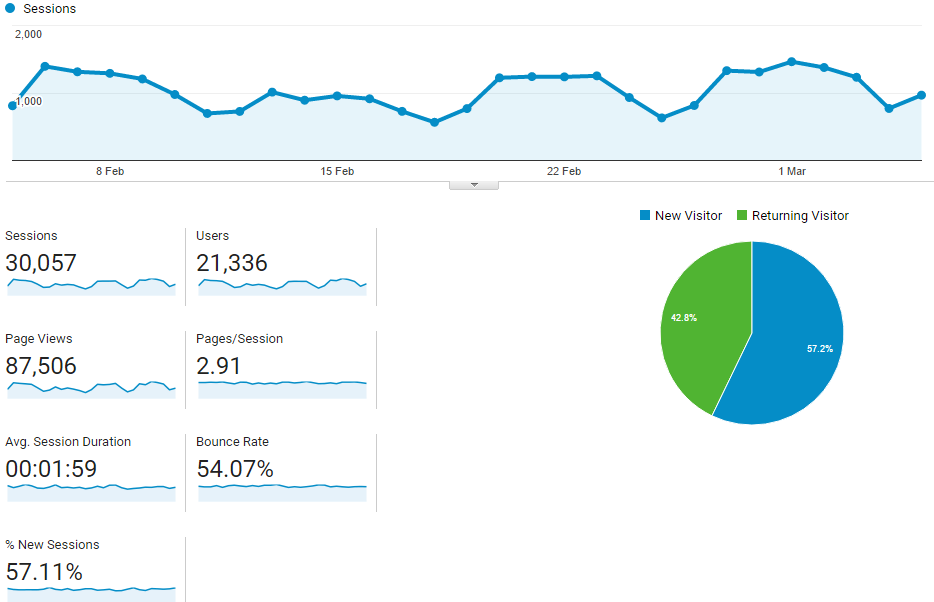
Promote and monitor your website on a regular basis to all the key search engines, the niche market search engines and directories and the local gazette sites. Use Google Analytics to monitor your site traffic and work out where improvements can be made. Use Google Webmaster to tell you where improvements can be made to your site. Test and measure all the time.
That should give some additional considerations for getting you the best advantage for your website on the net and therefore getting a greater return.
About the Author.
This article was written by Simon Thomas who has been active on the Internet since 1995 and runs a number of commercially successful Internet projects. He supports the building of clients’ websites to the correct standards, not just SEO, and maintains on-going search engine marketing for clients that value high performing websites.
For more information.
t: 01279 871 694
e: simon@toucanweb.co.ukw: www.toucanweb.co.uk
Copyright Toucan Internet LLP 2009©. All rights reserved.
11 FAQs on Search Engine Marketing
Posted by admin in Business Wisdom, Search Engine Marketing, Search Engine Optimisation on December 15th, 2009
Having a commercially successful website is ever increasingly important to businesses as the website moves centre stage in delivering corporate communications, be that the sale of products or services, liaison with suppliers, customers, after sales support or integration with back office systems for integrated accounts and stock handling.
However if your website is not showing highly in the top search engine results for your prime search phrases your business is missing out. This is shark infested waters for businesses looking for quality honest suppliers to provide effective and affordable optimisation of their websites so it is found by the search engines with their chosen key terms. There are companies that promise results and either fail to deliver, fail to deliver consistently or use techniques that could ultimately damage your reputation or brand online by having your web domain blacklisted.
Below are a few basic questions that are routinely asked to help you fill in the blanks when considering how to make your website work harder for you.
1. What is Search Engine Optimisation or SEO?
SEO stands for Search Engine Optimisation. It encompasses a raft of techniques and approaches to increase the readiness of your website to be understood and therefore categorised by the search engines.
2. What is an Organic listing?
An organic listing is the listing of one of your web pages in a search engine and it is included and ranked based on the search engines perceived merits of your web page and website. More and more it is apparent that the good quality websites that deliver great content and play by the rules are finding favour with the search engines.
3. What is Ethical Search Engine Optimisation?
Ethical Search Engine Optimisation or White Hat SEO is simply the use of good optimisation techniques that brings real benefit to the possible visitors to your site. The programmes that assess your site are getting ever more cleverer about rating what is good and penalising what could be seen as trying to take unfair advantage.
4. What are Black Hat techniques?
These are techniques that can be employed to spoof the search engines into thinking that your site is better than it actually is. Whilst we perceive that good SEO techniques should push the envelope, we strongly recommend stopping short of Black Hat techniques since should you be found to have used techniques, or have engaged someone who has used such techniques on your website, it can result in your page being penalised or even excluded from some or all of the major search engines.
5. Why does my website not show in the search results?
There is a raft of different reasons when this may be the case and here are a few for consideration:
- You may not have a search engine optimised design. Many designers create brilliant designs, but do not team up with equivalently skilled web partners who know how to write the code that delivers the site to the web browser.
- The site may not be written to be adequately readable by the search engines that you want to engender.
- The site or web pages could have missing or incongruous elements such that the search engine is confused about the content and purpose of the site.
- You or your web engineer may have strayed into inadvertently using Black Hat Techniques. And the site has been downgraded in response. You may not have submitted the site adequately as part of your post launch search engine marketing. (See http://blog.toucan-group.com/?p=17 for an extensive SEM program) .
6. What is Keyword research?
Keyword research is finding the right words that will deliver the highest number of visitors to your website possible. Believe me, a single “S” going from a singular to a plural can mean a tenfold difference in visitors.
To get to the optimum keywords the routine is to start with your instinctive choices, extract key words from top competing sites, then rank all those terms in order of real world usage. Then, by applying some instinctive personal understanding of the market place, together with an eye to how much the term is contended, draw up your final list. How this list is subsequently used is down to the skills of your web coder and copywriter who should work “hand in glove”.
7. How do I get recognised or ranked for specific keywords?
Apart from putting the right keywords in the right places you have to have the right keywords selected in the first place. Once the site is optimised and launched into the big wide world it needs to be promoted and this is where a comprehensive Search Engine Marketing programme needs to be put in place so the site is promoted and monitored properly. It not only needs to be promoted to the obvious search engines but also the niche directories and local gazetteer sites.
8. What is search engine friendly design?
The way a design is converted to a web page can be the make or break of a site’s search engine performance; a friendly design is readable and an unfriendly design is far less so. Certain techniques hamper search engines from understanding your site and some can stop a search engine from even looking at your pages. This is where you need a good web construction partner who you trust to understand what can be done and also to get the best out of the creative design provided by the designer. Here you start to see that web coder, creative designer and copywriter have to work as one for a website that stands any chance of success against the every rising bar of other quality websites.
Absolutely, Google may ignore Meta Tag Keywords, but the properly written Meta Description is paramount to good SEO.
10.How can I achieve a top 10 result?
Follow all the rules, do the research and keep the site current and relevant. Promote under a structured Search Engine Marketing programme and respond to the feedback that the SEM campaign gives you.
11. Is cheap hosting a good idea?
Absolutely not! Taking Google as the market leading search provider; it rates websites on performance. Performance is measured a number of ways, some will be as a result of how the site was built and some by how it is delivered. Cheap servers deliver sites in a measurably slower manner for any number of reasons and your site will be ranked accordingly. There is free software on the Internet to monitor website performance and you want to be sure that you’re not “saving” on hosting but missing out on good rankings – it’s a false economy to do so.
About the Author.
This article was written by Simon Thomas who has been active on the Internet since 1995 and runs a number of commercially successful Internet projects. He supports the building of clients’ websites to the correct standards, not just SEO, and maintains on-going search engine marketing for clients that value high performing websites.
For more information.
t: 01279 871 694
Copyright Toucan Internet LLP 2009©. All rights reserved.
Toucan Internet at the Dentists
Posted by admin in Search Engine Marketing, Search Engine Optimisation, Web on October 14th, 2009
Nobody likes going to the dentist; or do they. Toucan Internet LLP seems to have found favour with progressive dentists looking for success online.

Welcome to Smile and Wellbeing
Smile & Wellbeing in Bishop’s Stortford was Toucan’s first success when charged with getting the site favoured by Google with top search terms “Dentist in Herts” and “Dentist in Bishops Stortford”. Entrepreneurial dentist Dr Bhavin Bhatt said “We had a lovely site that projected our practice well, but until we handed control of the website to Toucan, nobody was visiting. Since Toucan optimised the site we have a steady stream of visitors and new clients, primarily from these search terms. We are pleased with the results and as such have referred Toucan to other colleagues looking for good web partners”.
See www.smileandwellbeing.co.uk

Hook Lane Dental Practice logo developed by Toucan Internet
One such referral was Dr Kieron Khoorbhoor of Hook Lane Dental in Welling, Kent. This was a new practice and Toucan was pleased to get involved at an early stage and provide creative designs for the practice logo, business stationery, referral forms, and of course a rather unique website including a video of the practice.
And just last week Dr Saba Qureshi’s Northwood Orthodontics website was launched. This site was designed to be in line with industry norms and project a friendly approachable practice that both parents and adults would feel comfortable using. The site is heavily optimised ready for search engine marketing and the domain name of www.orthodontics-london.co.uk hides no secret that we’re after some serious Google referrers.
For more information on Toucan and how we could help develop your business please call us for a chat.
t: 01279 871 694
Copyright Toucan Internet LLP 2009©. All rights reserved.